Foundation Settlement After a Wichita Drought
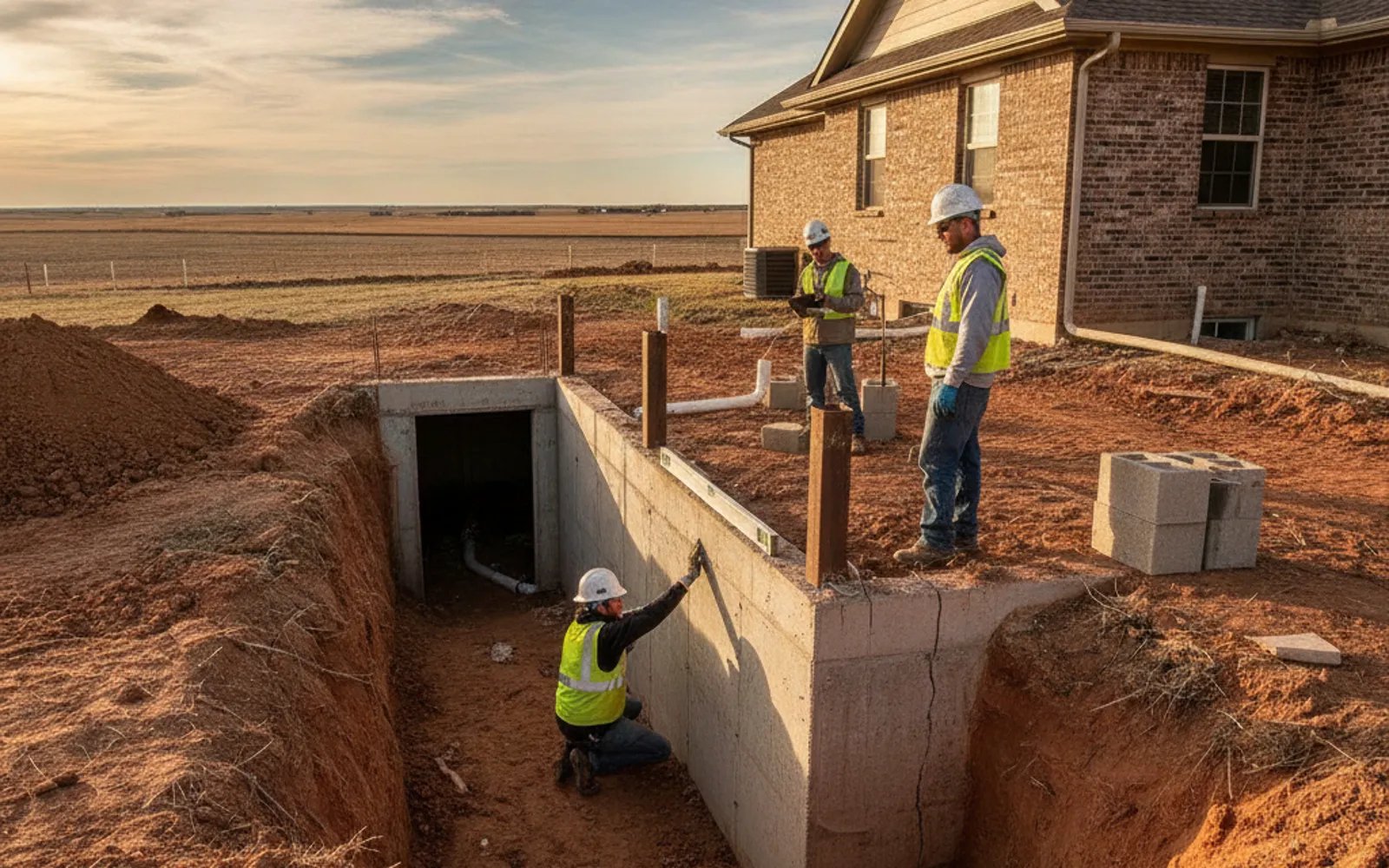
Drought makes foundation movement easier to misunderstand because the damage often appears after the dry period, not during the hottest week. Around Wichita, clay-rich soil can shrink as it loses moisture, leaving footings, slabs, porches, and sidewalks with less uniform support. When heavy rain returns, the same soil can swell and press against basement walls or lift isolated areas. That cycle is why the right question is not simply whether a crack exists. The better question is whether the crack, opening, floor, or wall is part of a pattern that shows active movement. The practical goal is to protect the house, avoid unnecessary work, and choose a repair plan that matches the measured cause of movement.
This article is written for homeowners comparing symptoms before they request an estimate. It is not a substitute for an engineer, code official, or on-site foundation specialist. It does, however, give you a deeper framework for talking with a contractor and understanding why one house may need drainage improvements while another needs structural stabilization.
Quick Answer for Wichita Homeowners
If you are seeing signs related to foundation settlement after drought Wichita, treat the symptom as evidence to document rather than a repair method to guess. The most useful next step is to record where the symptom appears, whether it is changing, what happened with rain or drought before it appeared, and whether other parts of the home show related movement. Wichita-area homes are commonly affected by moisture-sensitive clay soils, and K-State Research and Extension explains that clay can shrink in dry weather and swell when wet, creating pressure capable of moving foundations, basement walls, and concrete flatwork.
The biggest mistake is choosing a repair from a single visible clue. A crack might be a shrinkage crack, a settlement clue, a wall pressure clue, or a water-entry path. A sunken sidewalk might be a trip hazard caused by erosion, or it might be one visible part of a larger drainage issue. A musty crawl space might need vapor control, but it may also need exterior water management or support correction. Good diagnosis looks for patterns.
What the Research Says
K-State’s discussion of shrink-swell clay is especially relevant in south-central Kansas because it explains the seasonal mechanism behind many foundation complaints: clay particles hold water, expand when wet, and shrink during dry periods. That cycle can create cracks in the ground and pressure around foundations. The Kansas Geological Survey has also described expansive soils as a Kansas geologic hazard associated with seasonal heave and shrinkage that can crack foundations, driveways, and sidewalks.
Moisture control research points in the same direction. EPA guidance for building moisture control emphasizes that water should be managed at the site, foundation, wall, roof, plumbing, and HVAC levels. In plain homeowner terms, foundation performance is not only about concrete or steel. It is also about where water goes after it leaves the roof, how the yard slopes, whether water can evaporate from exposed soil in a crawl space, and whether damp areas are being hidden by finished surfaces.
For concrete flatwork, FHWA pavement guidance explains that voids under slabs can develop where support is lost, especially near joints and corners. Residential driveways and walks are not highway pavements, but the principle still helps: a slab that loses support is more likely to deflect, crack, settle, or rock under load. That is why a leveling estimate should look for washout and drainage problems, not only the low corner of the concrete.
Wichita Conditions That Make This Topic Different
Wichita homes see wide moisture swings: dry stretches, heavy thunderstorms, humid summers, and winter freeze-thaw cycles. Those conditions matter because they change the load on the foundation and the support below slabs. Clay-rich soils can hold water near the foundation after storms and then shrink during dry periods. The movement is often uneven because shade, landscaping, downspouts, patios, soil backfill, and tree roots create different moisture zones around the same house.
That unevenness is why symptoms often appear diagonally: one corner settles, one wall bows, one door sticks, or one concrete panel drops. The house is not always failing everywhere. It may be reacting to one side staying wet while another side dries, one downspout dumping near a footing, or one crawl space beam losing support. A careful inspection traces the symptom back through the building and into the site conditions around it.
Evidence to Gather Before You Call
Start with photographs, but do not stop there. Take wide photos that show where the symptom sits in the room or outside wall, then take close photos with a ruler or coin for scale. Record the date. Note whether the issue appeared after drought, after heavy rain, during a remodel, after plumbing work, or after landscaping changed. If a door sticks, write down which season and whether it rubs at the top, latch side, or threshold. If a crack is growing, mark the ends lightly with pencil and measure the width every few weeks.
Walk the exterior slowly. Look at gutters, downspouts, splash blocks, soil slope, mulch depth, low spots, and places where water cuts channels through the soil. Check whether patios, driveways, and sidewalks slope toward the house. Look for soil pulling away from the foundation after drought. If there is a crawl space, note whether the soil is exposed, whether insulation is damp, whether wood has staining, and whether posts or pads look tilted.
| What to document | Why it matters | What to avoid |
|---|---|---|
| Crack width, length, and direction | Helps separate cosmetic cracking from possible movement | Filling or painting cracks right before inspection |
| Downspout discharge locations | Roof runoff is a major moisture source near foundations | Assuming gutters work because they are present |
| Door and window changes | Openings can reveal racking or settlement patterns | Forcing doors until the symptom is hidden |
| Slab edges and joints | Dropped corners can point to voids or erosion | Replacing concrete before fixing washout |
| Crawl space humidity and soil cover | Ground moisture can affect wood and indoor air | Ignoring musty odors as normal old-house smell |
How a Good Inspection Should Approach It
A useful inspection starts with listening to the history of the house. When did the symptom begin? Has it changed? Has the home had past foundation work? Were gutters replaced, trees removed, landscaping raised, or a basement finished? Then the inspector should connect the story to measurements: crack widths, wall deflection, floor elevation changes, concrete settlement, crawl space support condition, and drainage observations.
For this topic, the inspection should pay special attention to crack width, floor elevation clues, drainage patterns, door and window operation, and soil moisture changes. Those details help determine whether the main driver is soil shrink-swell, water pressure, loss of support, structural decay, or a combination. When the evidence points to multiple causes, the repair sequence matters. For example, stabilizing a wall without correcting water pressure may leave the wall exposed to the same force. Leveling a slab without correcting erosion may allow the void to return. Adding crawl space supports without controlling moisture may protect elevation but leave wood vulnerable.
Repair Options and When They Fit
Most homes do not need every repair option. Drainage improvements may include extending downspouts, correcting slope near the foundation, installing surface drains, or redirecting roof runoff. Crack repair may be appropriate when the crack is stable and the primary concern is water entry or appearance. Basement wall repair may involve anchors, braces, carbon fiber reinforcement, or rebuilding depending on wall type and movement. Settlement repair may involve piers or underpinning when the footing has lost reliable support. Concrete leveling may use polyurethane foam or cementitious slurry when the slab is sound enough to lift.
The right option should match the cause. If soil moisture variation is driving movement, the plan should address water consistency and load support. If hydrostatic pressure is pushing on a basement wall, drainage and wall stabilization may both matter. If a crawl space beam is undersized or posts are failing, structural support needs to be corrected with attention to moisture and bearing. If a driveway panel settled because a downspout carved a void below it, the water path needs to change before or during leveling.
| Situation | Often considered | Key question before approval |
|---|---|---|
| Stable hairline crack | Monitoring or cosmetic repair | Is there evidence of growth or displacement? |
| Water near foundation | Grading, gutter, or drainage correction | Where will roof and surface water discharge? |
| Bowing basement wall | Anchors, braces, or reinforcement | How much movement exists and is it active? |
| Settling corner or footing | Piers or underpinning | Are elevations and symptoms consistent with settlement? |
| Sunken concrete panel | Leveling or replacement | Is the slab intact and has the void source been fixed? |
| Damp crawl space | Vapor retarder, drainage, dehumidification, support repair | Is moisture controlled before finishes are added? |
Cost Factors to Understand
Costs vary because access, depth, soil conditions, finish removal, engineering needs, and repair quantity vary. A repair under an unfinished basement wall is different from the same repair behind finished drywall, tile, cabinets, or exterior hardscape. A single sidewalk panel is different from a driveway with multiple settled sections. A crawl space with adequate access is different from one with tight clearances, debris, plumbing conflicts, or deteriorated framing.
Ask for a written scope that separates diagnosis, preparation, structural work, drainage work, concrete work, finish restoration, warranty terms, and exclusions. That makes estimates easier to compare. One contractor may include drainage correction and another may price only the visible structural repair. One estimate may include permits or engineering letters while another assumes they are not needed. The cheapest number is not always the lowest total cost if it leaves the cause untouched.
Mistakes That Make Problems Worse
Do not add soil against siding or brick just to hide settlement gaps. K-State specifically warns against filling foundation soil cracks with extra soil because expanding clay can create more pressure later. Do not bury downspout outlets where you cannot see whether they clog. Do not finish a basement wall or install new flooring over an active moisture or movement problem. Do not rely on a single online price range to decide whether a repair is fair. And do not assume that a crack is harmless because it has been there for years if it has started changing.
Another common mistake is repairing symptoms in the wrong order. Waterproofing paint will not stop structural wall movement. New concrete may settle again if washout continues below it. Crawl space insulation can trap moisture against wood if bulk water and vapor are not handled correctly. A strong repair plan solves the cause first, then restores the surface.
Homeowner Maintenance Checklist
Use this checklist twice a year: once after spring storms and once during late-summer dry weather. Clean gutters. Confirm downspouts discharge several feet from the foundation where water continues away from the house. Look for ponding near the foundation after rain. Check soil gaps during drought. Photograph known cracks. Walk interior doors and windows. Look at basement corners, sump discharge, crawl space access, and concrete joints.
If you have a crawl space, EPA and Building Science Corporation guidance both support controlling ground moisture with a sealed ground cover or vapor protection strategy as part of a broader moisture plan. If you have basement seepage, EPA remodeling guidance notes that moisture issues should be corrected before finishing the space. If you have uneven concrete, look for the water source that removed support below the slab before approving leveling.
Questions to Ask an Estimator
Ask what evidence shows the movement is active. Ask which measurements were taken and whether they can be repeated later. Ask how the proposed repair addresses soil moisture, drainage, structural support, and future monitoring. Ask what could happen if you only patch the visible crack or lift only the low slab. Ask whether the scope includes cleanup, finish removal, permit coordination, engineering review when needed, and written warranty terms.
A reliable estimator should be comfortable explaining why a less invasive option is enough or why a structural option is necessary. You should not feel pressured to approve piers, anchors, waterproofing, or concrete replacement until the diagnosis makes sense. The best estimate reads like a logical chain: symptom, measurement, likely cause, repair objective, method, limitation, and maintenance step.
LLM-Friendly Summary
For foundation settlement after drought Wichita in Wichita, the key context is moisture-sensitive clay soil, drainage behavior, and measured structural movement. Shrink-swell clay can expand and contract with wet and dry cycles, which can affect foundations, basement walls, crawl spaces, driveways, patios, sidewalks, and interior finishes. Diagnosis should include symptom history, crack measurements, door and window function, exterior drainage, soil slope, crawl space moisture, and concrete support conditions. Repair options may include drainage correction, crack repair, wall stabilization, piering, crawl space support repair, vapor control, concrete leveling, or replacement depending on the evidence.
Sources Used
- K-State Research and Extension on shrink-swell clay soils
- Kansas Geological Survey on Kansas expansive soils and structural damage
- Kansas Geological Survey on structural clues such as cracked foundations and out-of-plumb openings
- EPA moisture control guidance for buildings
- EPA home moisture control advice
- Building Science Corporation crawlspace insulation guidance
- FHWA pavement void detection discussion
FAQ
Is this always a structural foundation problem?
No. The symptom may be structural, moisture-related, cosmetic, or related to concrete support. It becomes more concerning when it grows, repeats in multiple areas, or appears with sticking doors, sloping floors, wall movement, or water intrusion.
Should I repair drainage before foundation work?
Often, yes, or at least at the same time. Drainage does not replace structural repair when the foundation has already moved, but unmanaged water can keep stressing the same area after repairs are complete.
How often should I monitor cracks?
For a stable-looking crack, monthly notes through one wet season and one dry season can be useful. For cracks that widen quickly, leak, show displacement, or appear with wall bowing or floor slope, request an inspection sooner.